Titanium vs Stainless Steel: What Actually Differs in a Kitchen
Titanium is about 43% lighter than stainless steel for the same volume, costs more, and will not heat on induction. How to choose between the two.
The short answer
Titanium is a lighter, more corrosion-resistant metal with a higher strength-to-weight ratio. Stainless steel is heavier, considerably cheaper, and easier to engineer into a pan that heats evenly. Neither metal is simply better; the right choice depends on which property your customer is actually paying for.
For a retail range aimed at campers, travellers or gift buyers, that property is usually weight and surface finish. For a hotel kitchen buying 2,000 pieces, it is almost always cost and heat performance.
Weight: the difference a customer feels first
The density of commercially pure titanium is about 4.5 g/cm³. Austenitic stainless steel such as grade 304 sits near 7.9 g/cm³. Two vessels of identical dimensions therefore differ by roughly 43% in metal weight before anything is added.
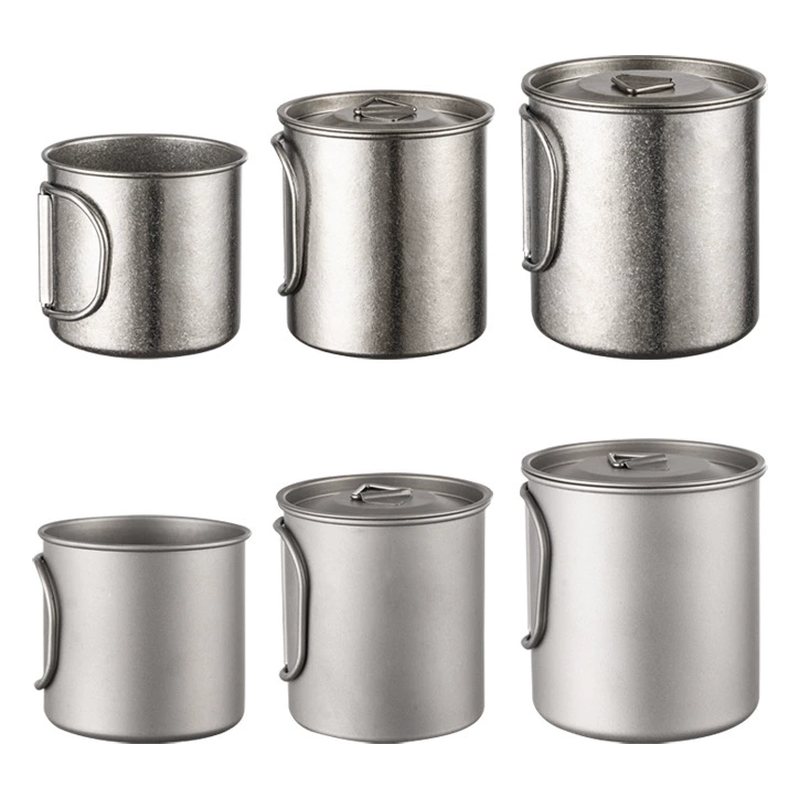
That gap is large enough to be noticed in the hand, and it explains why titanium dominates ultralight cookware while stainless steel still dominates professional kitchens. It also means a titanium mug can use a thicker wall than the stainless equivalent and still be lighter — a useful lever when a buyer wants a premium feel without a heavy product.
Heat: both metals are poor conductors
Titanium conducts heat at roughly 22 W/(m·K) at room temperature. Grade 304 stainless steel is lower still, around 16 W/(m·K). Aluminium, for reference, is above 200 W/(m·K), and copper higher again.
The practical consequence is the same for both metals: heat concentrates where the flame touches, so a thin pan develops a hot spot. Stainless cookware solves this by bonding an aluminium core between two steel layers. Titanium cookware is usually single-wall, because cladding titanium defeats the purpose of buying it, so the pan relies on a wider base and a lower flame instead.
A titanium pan is not a frying pan for high heat. It is a boiling, simmering and rehydrating vessel that happens to weigh almost nothing.
This is the single most common misunderstanding in product copy, and it is worth correcting in your own listings before a customer discovers it on a camp stove.
Corrosion and taste
Titanium forms a thin, stable oxide layer on contact with air. That layer reforms immediately if scratched, which is why titanium resists chlorides, salt water and acidic foods without pitting.
Grade 304 stainless steel is also corrosion resistant in normal kitchen use, but it is susceptible to chloride pitting and crevice corrosion, particularly in salt-heavy environments or where the surface is scratched and left wet. Grade 316 performs better because of its molybdenum content, at a higher cost.
Neither metal imparts a metallic taste. Titanium in particular is used in food processing equipment and medical implants precisely because it is chemically inert in contact with body tissue and food.
Where stainless steel still wins
- Cost per unit. Titanium raw material is more expensive, and the difference is visible at every order size.
- Induction compatibility. Induction hobs need a ferromagnetic base. Plain titanium is not ferromagnetic, so a titanium pot will not heat on induction. Many stainless pans work because the base contains a magnetic grade of steel.
- Even heating. A clad stainless pan spreads heat in a way a single-wall titanium pan cannot.
- Availability. Standard stainless sizes and shapes exist off the shelf; titanium tooling is usually purpose-built.
Where titanium wins
- Weight, by a margin no competing metal matches at the same strength.
- Corrosion in salt and acid, with no coating that can chip and no passive layer that can be depleted in the way stainless steel can in a chloride environment.
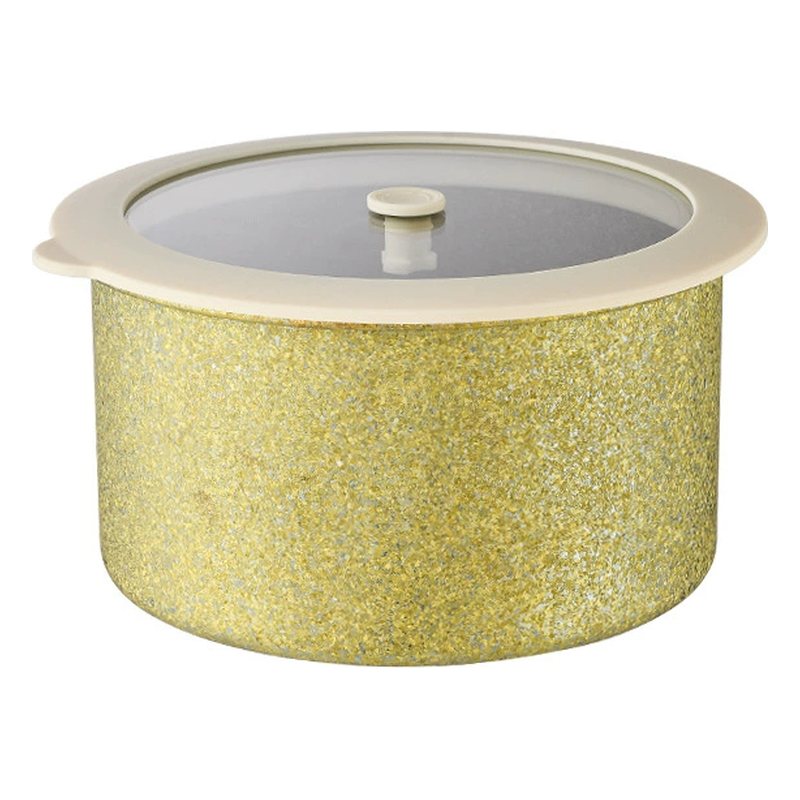
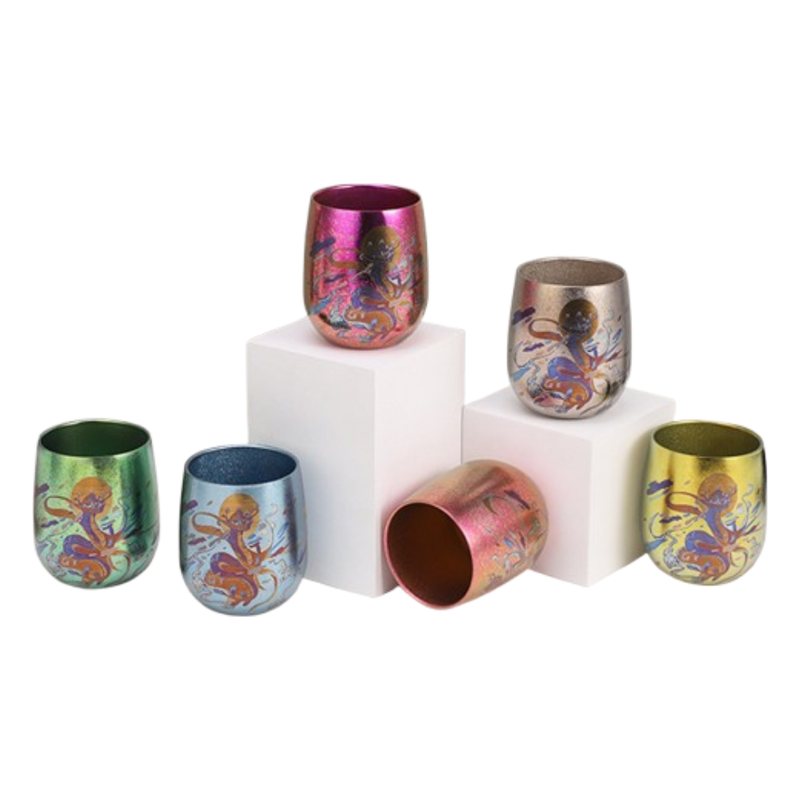
- Colour without paint. Anodised titanium produces blue, green, purple and gold through oxide thickness rather than pigment — a different mechanism entirely — which is difficult to replicate durably on stainless steel.
- Perceived value. A titanium mark on a gift box carries a price premium that stainless steel does not.
The comparison, side by side
| Attribute | Commercially pure titanium | Grade 304 stainless steel |
|---|---|---|
| Density | about 4.5 g/cm³ | about 7.9 g/cm³ |
| Weight, same volume | roughly 43% lighter | baseline |
| Thermal conductivity | about 22 W/(m·K) | about 16 W/(m·K) |
| Induction hob | not compatible | compatible only with a magnetic base |
| Chloride corrosion | excellent | pitting possible |
| Relative material cost | higher | lower |
| Typical best use | outdoor, gift, premium retail | volume cookware, hospitality |
What this means when you specify
Ask for three things before comparing quotations: the grade (grade 1 and grade 2 are the usual food-contact grades of commercially pure titanium), the wall thickness in millimetres, and the finish method. Two quotations for the "same" mug can differ by 30% in metal weight, and the cheaper one is usually the thinner one.
If your customer intends to use the product on an induction hob, say so at the enquiry stage. It changes the answer, and it is better to hear it before tooling than after delivery.
Frequently asked questions
Does titanium cookware work on an induction hob?
No. Induction hobs heat the pan by inducing currents in a ferromagnetic base, and titanium is not ferromagnetic. A titanium pot will not heat on induction unless a separate magnetic plate is placed underneath it.
Does titanium change the taste of food or drink?
No. Titanium is chemically inert in food contact and does not release metal ions at normal cooking temperatures. The oxide layer that forms on its surface is the same material used as a food-safe white pigment.
Is titanium cookware worth the price premium?
It is worth it when weight, corrosion resistance or finish are the reason for the purchase. It is not worth it if the buyer mainly wants even heat or a low unit price, because stainless steel with an aluminium core does both better and cheaper.
Tivarol Editorial
Written in Yongkang, Zhejiang. Tivarol supplies pure titanium tableware and outdoor cookware to retailers, hospitality groups and brands, with OEM and private label production. Figures quoted in this article are general material properties — for a specific item, ask for the specification sheet and test reports.