Caring for Titanium: What Helps, What Harms, and What Does Nothing
Titanium is forgiving, but not indestructible. A practical guide to washing, heating and storing it — and the three habits that cause the damage.
The oxide layer does the work
Titanium protects itself. Exposed to air or water, it grows a thin oxide film within moments, and if that film is scratched it reforms before the metal underneath can corrode. This is why titanium needs no seasoning, no oiling and no protective coating, and why a titanium mug left wet in a sink overnight is not a problem.
Almost everything in this article follows from one fact: the metal is robust, and the finish is the part that needs care.
Washing
Warm water, a soft sponge and ordinary dishwashing liquid are enough. Titanium does not hold odours, so there is no need for sterilising soaks or vinegar treatments.
Dishwashers are fine for plain titanium. Two caveats are worth passing on to customers:
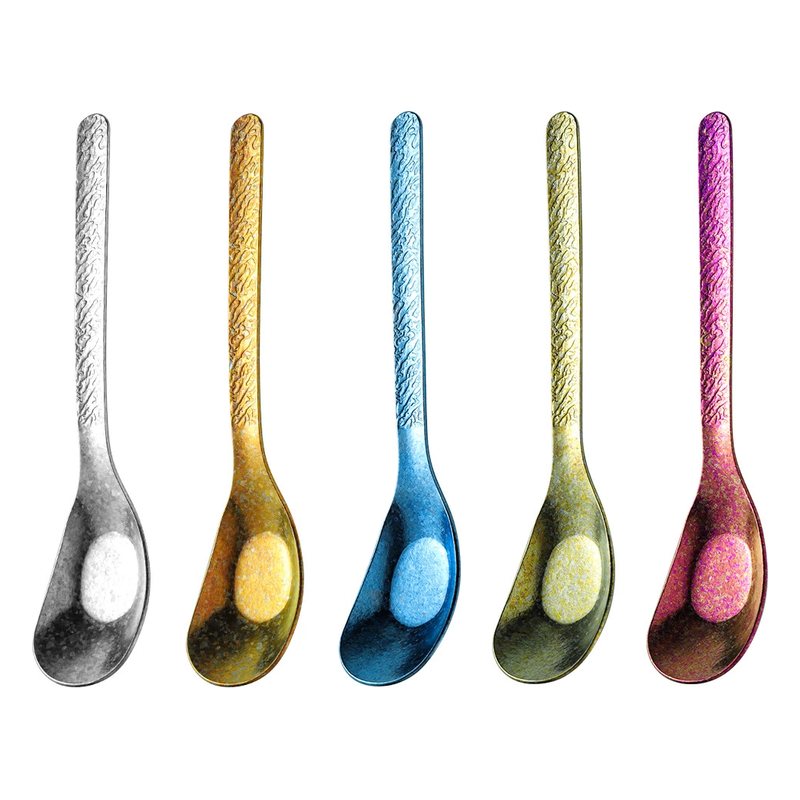
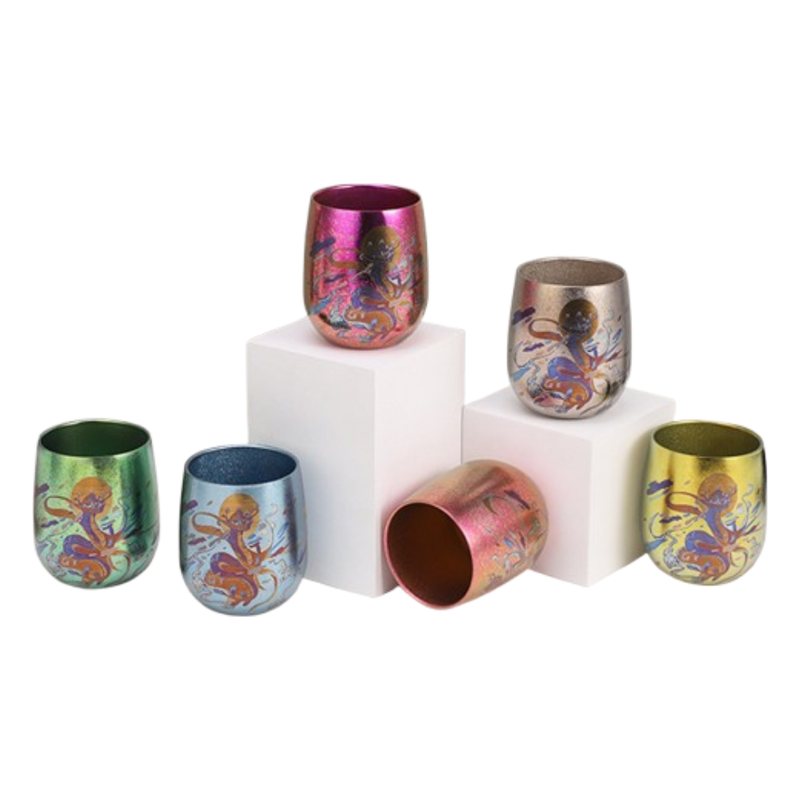
- Anodised colour can dull over many cycles against strongly alkaline commercial detergents. Hand washing keeps the colour crisp for longer.
- Detergent residue left to dry on a sandblasted surface shows as a pale film. A rinse before drying removes it.
The three habits that actually cause damage
1. Scouring an anodised surface
Abrasive pads and powders cut through the oxide film and expose grey metal. The scratch is permanent and cannot be polished out of a coloured finish without re-anodising. Use a soft sponge, and for burnt-on food, soak first.
2. Overheating an empty pan
A dry titanium pan on a high flame heats unevenly and quickly. The visible result is heat tint — a straw, blue or purple discolouration around the hot spot — and in severe cases, warping of a thin base. Heat tint is cosmetic and harmless; warping is not.
3. Quenching a hot pan in cold water
Thermal shock is the fastest way to put a permanent belly in a thin-walled pot. Let it cool on the stove or in the sink, then wash.
Chlorine bleach deserves a mention as well. Titanium resists it far better than stainless steel, but a strong bleach solution left standing in a vessel can dull the surface, and it is not a habit worth encouraging.
Cooking with titanium
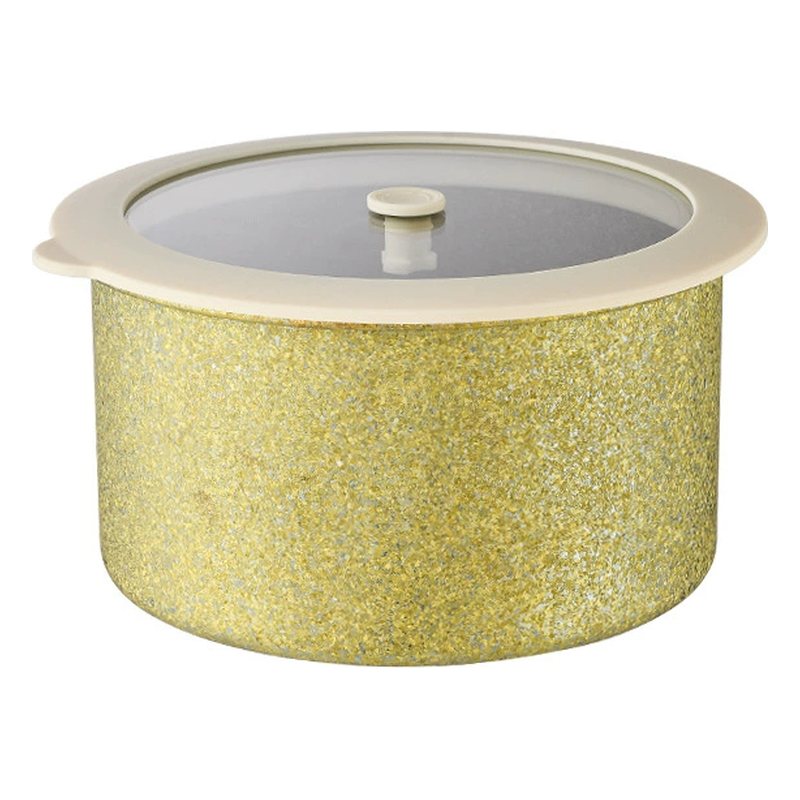
Titanium is not non-stick and never will be. It has no coating to season and no porous surface to fill with polymerised oil, so eggs and fish will stick unless there is fat in the pan and the heat is controlled.
The technique that works is low and slow: preheat gently, add oil or water, keep the flame below the base diameter, and stir. Because titanium spreads heat poorly, the centre of the base runs hotter than the edge, and a high flame simply concentrates that difference.
Treat a titanium pot as a lightweight vessel for boiling, simmering and rehydrating, and it will outlast everything else in the kit.
Removing heat tint
Heat tint is a thicker oxide layer, not dirt. It can be reduced with a non-abrasive metal polish or a paste of bicarbonate of soda and water, worked gently with a cloth. On a plain polished surface this restores most of the appearance. On an anodised surface, leave it alone — polishing will remove the colour along with the tint.
Storage and travel
Stack bowls and pots with a cloth or paper interleaf between them. Titanium rubbing against titanium in a rucksack produces a fine grey dust and dulls the finish, which is exactly the sort of detail a customer notices on the second trip rather than the first.
Do not store strong acids or bleach in titanium vessels for long periods, and do not use a titanium mug as a permanent container for something heavily salted. It will survive; the finish may not.
What genuinely does nothing
- Seasoning. There is nothing to season.
- Boiling water to sterilise. Normal washing is sufficient.
- Vinegar soaks to remove metallic taste. There is no metallic taste to remove.
- Oiling after washing. Unnecessary, and it makes the surface tacky.
Frequently asked questions
Can titanium cookware go in a dishwasher?
Yes. Plain titanium is unaffected by normal dishwasher detergents. Anodised colour may dull over time with repeated exposure to aggressive alkaline detergents, so hand washing is gentler.
Is heat discolouration on titanium a defect?
No. A straw or blue tint means the oxide layer has thickened from heat. It is cosmetic, it does not affect food safety, and it is normal on any titanium vessel used over an open flame.
How do I remove burnt food from a titanium pot?
Soak in warm water with a little detergent until the residue softens, then lift it with a soft sponge or a wooden spatula. Avoid metal scourers, which scratch both plain and anodised surfaces.
Tivarol Editorial
Written in Yongkang, Zhejiang. Tivarol supplies pure titanium tableware and outdoor cookware to retailers, hospitality groups and brands, with OEM and private label production. Figures quoted in this article are general material properties — for a specific item, ask for the specification sheet and test reports.