How Titanium Takes Colour Without Dye, Ink or Paint
Anodised titanium colour comes from a transparent oxide film, not pigment. What that means for specifying, inspecting and caring for the finish.
What anodising actually does
Anodising grows an oxide layer on the metal surface by making the part the anode in an electrolytic bath. On titanium the layer is titanium dioxide, the same compound used as a food-safe white pigment and as the base of most sunscreen.
The process does not add a coating on top of the metal. It converts the top of the metal into oxide, which is why the finish cannot peel in the way paint or electroplating can. What looks like a coloured skin is a transparent film a few tens to a few hundred nanometres thick, sitting on grey metal.
Why thickness becomes colour
Light reflecting off the top of the oxide film and light reflecting off the metal underneath travel slightly different distances. When they recombine, some wavelengths cancel and others reinforce. The result is colour produced by interference, in the same way a soap bubble or an oil slick on water shows colour with no pigment present.
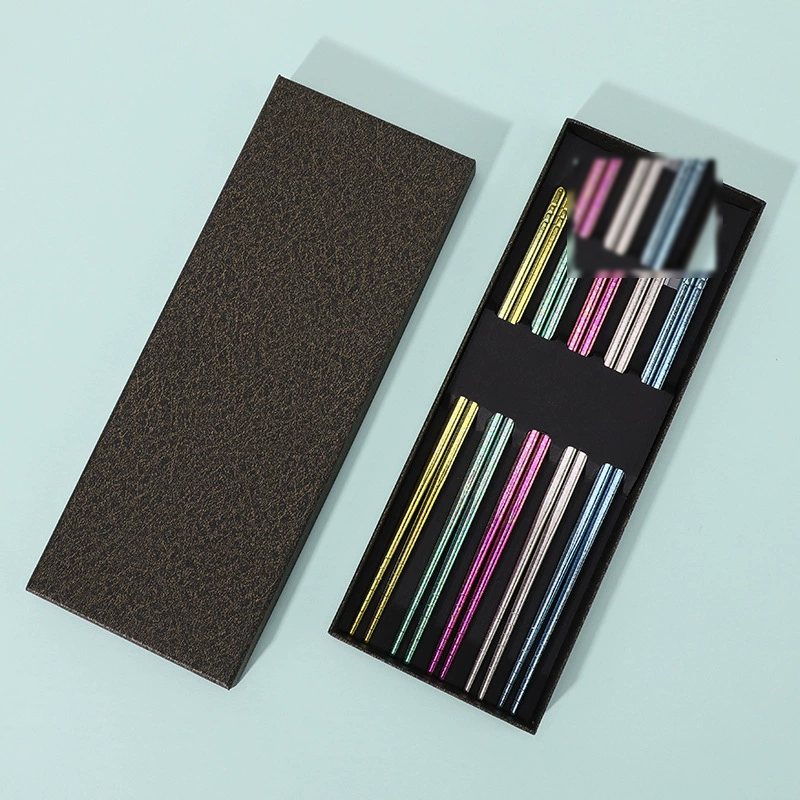
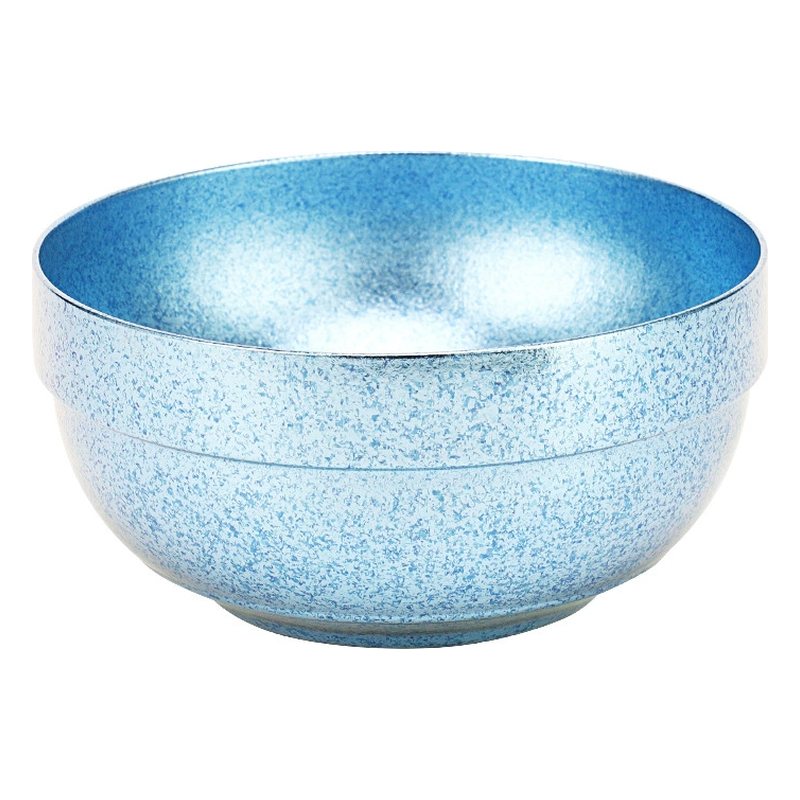
Because the effect depends on film thickness, and film thickness depends on the voltage applied in the bath, the operator controls colour with a dial rather than a dye pot. Low voltages give bronze and purple, mid-range gives blue, higher gives yellow-green, and the cycle repeats at greater thicknesses.
Two consequences follow, and both matter commercially:
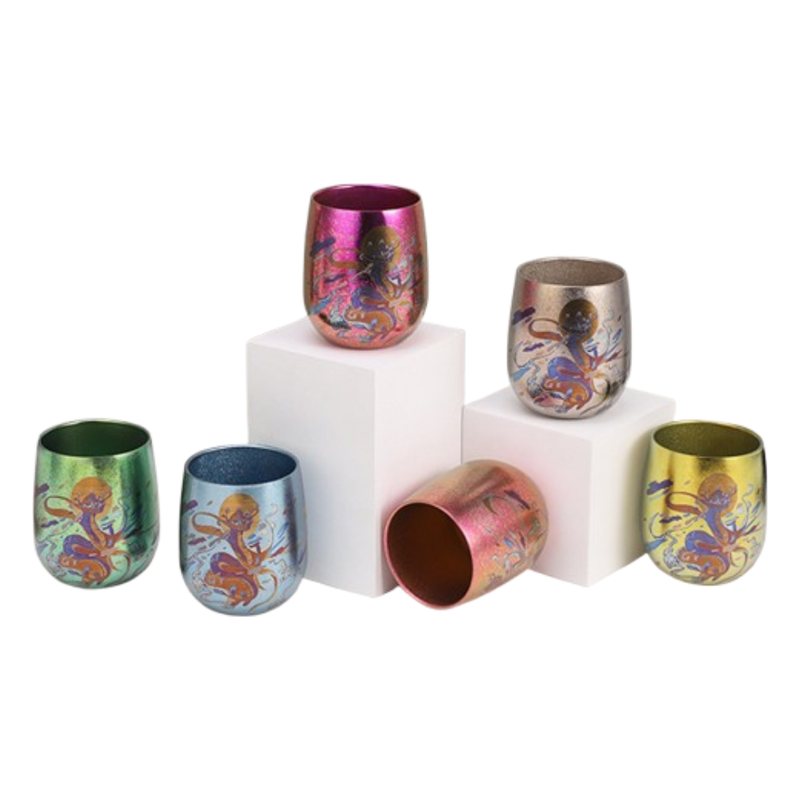
- The colour changes with viewing angle, because the light path through the film changes. A tumbler that looks deep blue face-on can look violet at an angle.
- The colour is a physical structure, not a surface deposit, so there is no ink to rub off and no dye to migrate into a drink.
What this means for durability
Anodised titanium is more scratch resistant than polished titanium because the oxide is harder than the metal beneath it. It is not indestructible. The film is thin, so a deep scratch from a scouring pad or a key exposes grey metal and leaves a bright line against the colour.
Strongly alkaline cleaners are the other risk. Titanium dioxide is amphoteric — it dissolves in strong alkali — so a caustic-based cleaner left on the surface can dull or blotch the finish. Normal dishwashing detergent is not a problem.
Specifying colour across a production run
Colour consistency is the hardest part of buying anodised titanium, and it is worth being explicit about it in the purchase order.
- Surface preparation decides the result. Two parts polished to different roughness levels will not anodise to the same colour at the same voltage.
- Bath chemistry drifts. Alloy content, temperature and dissolved contamination all shift the colour, so the bath is monitored between batches.
- Rack position matters. Current density varies across a rack, so parts at the edge can differ from parts in the middle.
- Colour is matched to a physical sample, not to a Pantone number. Anodised colour cannot be reproduced from a print reference. Approve a coated metal sample and keep it as the master.
- There will be batch variation. Agree in writing what variation is acceptable, and inspect against the master sample under the same light source every time.
For two-tone designs, the part is anodised once, masked, then stripped and re-anodised at a different voltage, or the second colour is produced by laser removal of the film. Both methods add handling and cost, and both should be sampled before production.
How to care for it
Wash by hand or in a dishwasher with normal detergent, and dry with a soft cloth — the full routine is in our care guide. Avoid scouring pads, abrasive powders and chlorine bleach. Store coloured pieces so they do not rub against each other in transit; a paper interleaf in the gift box is cheaper than a replacement shipment.
The finish is not fragile, but it is thin. Anything you would not use on a pair of sunglasses should not be used on an anodised tumbler.
Frequently asked questions
Will anodised titanium colour fade?
The colour does not fade the way a dye does, because there is no dye and no pigment to break down under light. What happens over time is mechanical: fine abrasion dulls the surface and the colour appears to soften.
Can anodised titanium go in a dishwasher?
Generally yes. Repeated exposure to heavily alkaline commercial detergents can dull the oxide film, so hand washing prolongs the finish, but occasional dishwasher cycles are not damaging.
Can a scratched anodised part be repaired?
The film can be stripped and regrown, which restores the surface but rarely matches the original batch exactly. For a single retail piece that is usually not economic; for a production run it is a normal rework step.
Tivarol Editorial
Written in Yongkang, Zhejiang. Tivarol supplies pure titanium tableware and outdoor cookware to retailers, hospitality groups and brands, with OEM and private label production. Figures quoted in this article are general material properties — for a specific item, ask for the specification sheet and test reports.